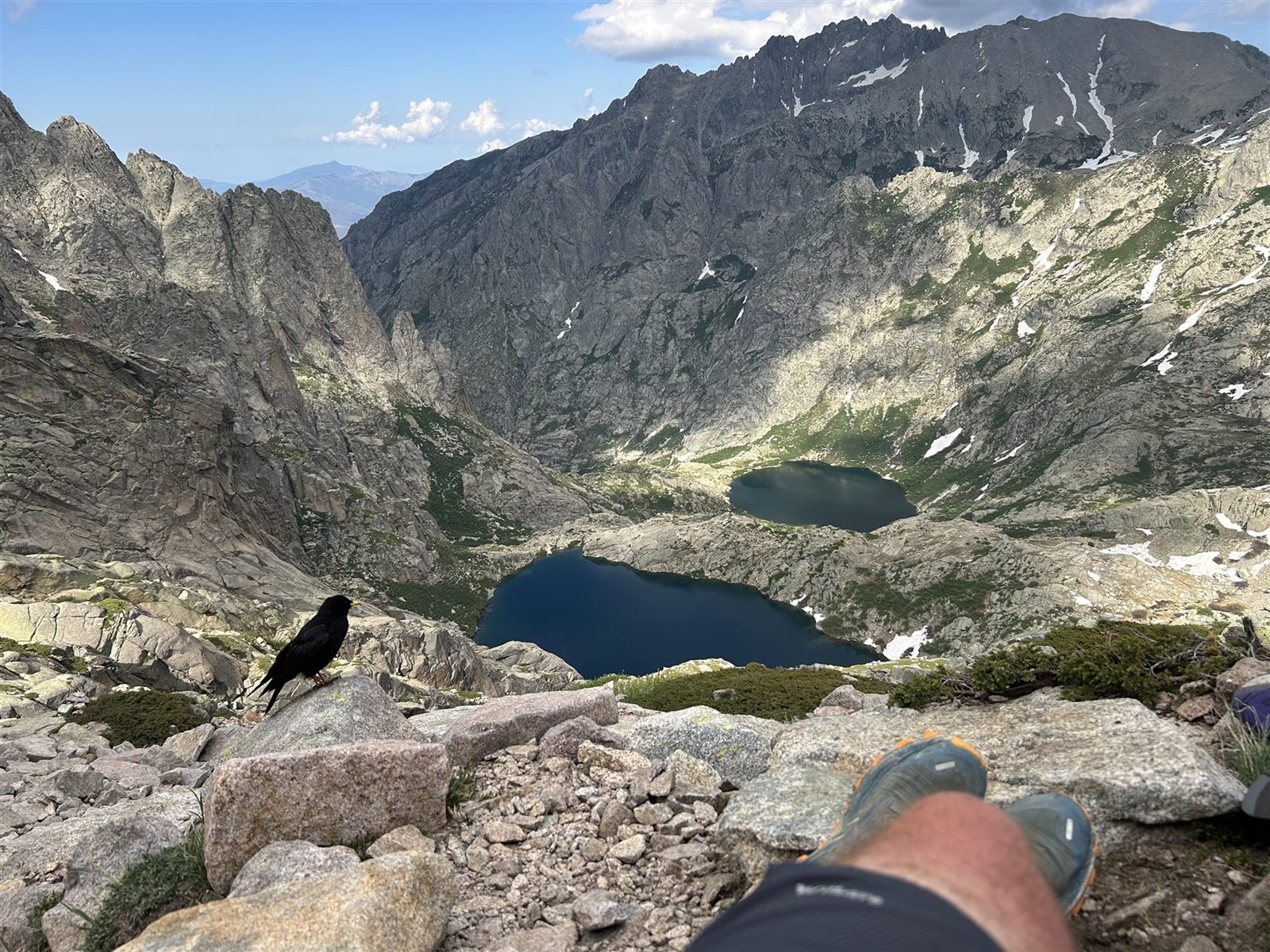
Some experiences change you long after you have lived through them. The GR20 is one of them. It is a hike of 180 kilometres and 13,000 metres of ascent, and just as much descent, which I managed to complete in 9 days. On paper, it is merely a demanding sporting challenge, but on the ground I discovered a profoundly rich experience.
From the first stages, the body imposes its biological and mental limits. Walking 10 to 12 hours a day is exhausting, and the real test is then managing to find the motivation to get up every morning, knowing full well what the day will be like, with the lack of sleep and the pain accumulated over the previous days. You quickly understand that to keep moving forward is not to avoid suffering, but to carry on in spite of it.
“To keep moving forward is not to avoid suffering, but to carry on in spite of it.”Enzo Lebreton · article on the GR20
The true richness of such a project lies in human relationships. Every day I crossed paths with many people, often meeting the same faces again from hut to hut. It is an opportunity to talk with people of every nationality, to build connections, to exchange and to share, regardless of age, profession or any other factor that, in everyday life, might have created distance. We were all there for one and the same goal: to finish this journey. Bonds formed naturally, the communal tables of the huts and their small size creating a pleasant closeness that made conversation unavoidable.
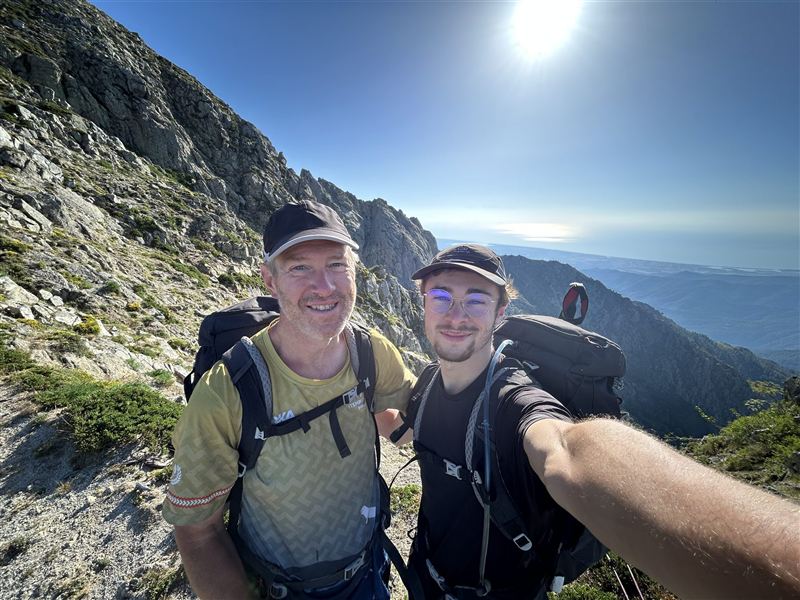
I shared this ordeal with my father. Going through these difficulties together and helping one another in the effort strengthens bonds with an intensity that no other shared activity had ever managed to create before. Such an experience lets you discover the other person in their vulnerabilities and doubts, and I would not have wanted to experience this with anyone other than my faithful climbing partner.
Another source of richness in such an expedition is the return to oneself and to nature. Being cut off from the internet throughout the route is a unique opportunity to step back and to get to know oneself better. Facing this presence, so often avoided, also means taking the time to let go a little of one’s phone and social media, in order to realise the richness of this world. It is not a situation to flee, but a rare opportunity to organise one’s thoughts and to be at last at peace with one’s convictions, ambitions and oneself. This kind of ordeal fundamentally transforms a person, forging self-confidence, patience and the grit to succeed at all costs.
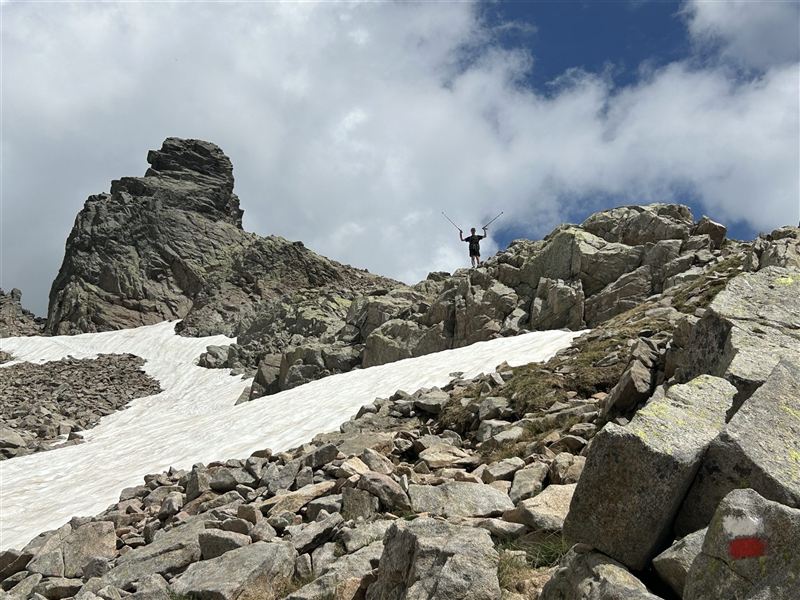
This stepping back inevitably changes our relationship with comfort. Anaesthetised by our standard of living, we often limit our frustrations to a poor internet connection or a closed fast-food restaurant. On the trail, the scale of values is completely reversed. True luxury then becomes the guarantee of a cold drink on arrival, the prospect of sleeping on a real mattress in a dormitory rather than in a tent, or the chance to take a shower whose hot water is available for only a few hours a day. This material deprivation forces us to realise the value of what we already have. It is important to keep in mind that this luxury, which in the end seems merely ordinary, is a privilege that many people, right next door or on the other side of the world, do not have.
Sometimes the path seems endless. 180 kilometres: how could I imagine that I would be capable of doing that? But in reality, it is only twenty kilometres a day for nine days. Mental health conditions work this way, like a long and chaotic path whose end is never visible at the beginning, but which most certainly exists. Your first 20 kilometres will simply consist in confiding to someone you trust that you need help. Faced with uncertainty or with the scale of an ordeal, the only way to keep believing in it, even a little, is to look down and focus on the next stage: take one more step.
Enzo Lebreton